LED display board rendering engine
We built a text motion engine that shows advertising, promotional, and notice messages with moving effects on LED display boards installed at shop entrances and indoors. When a shop owner types a message, the engine applies scrolling, transition, and emphasis effects to the text and sends it to the board. A display board offers a more limited canvas than an ordinary screen, so the task was making messages catch customers' eyes within those limits. Alongside the engine, we built the flow that carries the owner's text and settings to the actual device.
An engine that turns an owner's one line into a moving ad
The text motion engine runs inside in-store LED display boards and outputs the advertising, promotional, and notice messages a shop owner types, with moving effects. It takes the entered text and settings, builds the dynamic effect for that message, and sends it to the board. The purpose of the engine was to let shop operators change the board's content themselves.

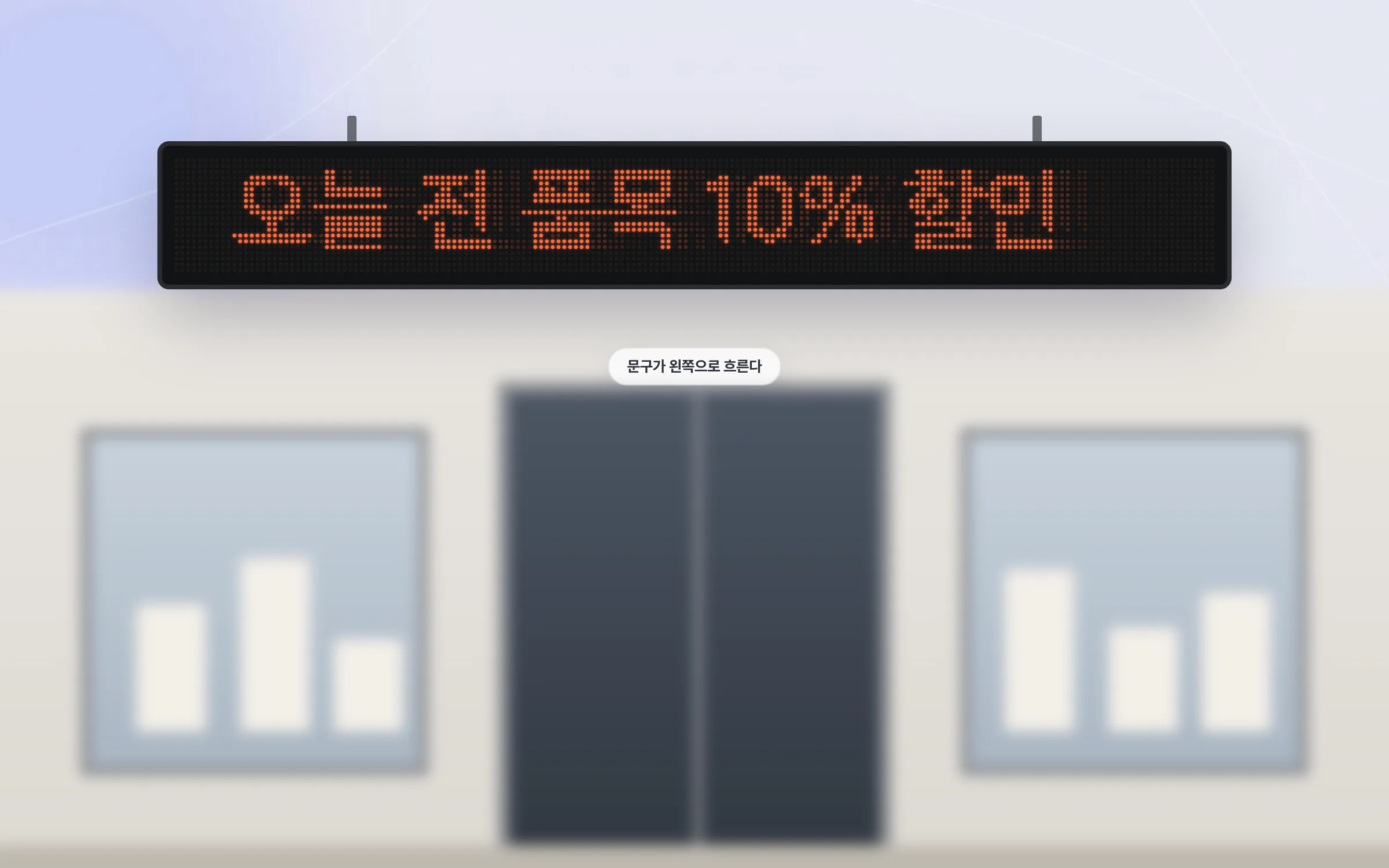
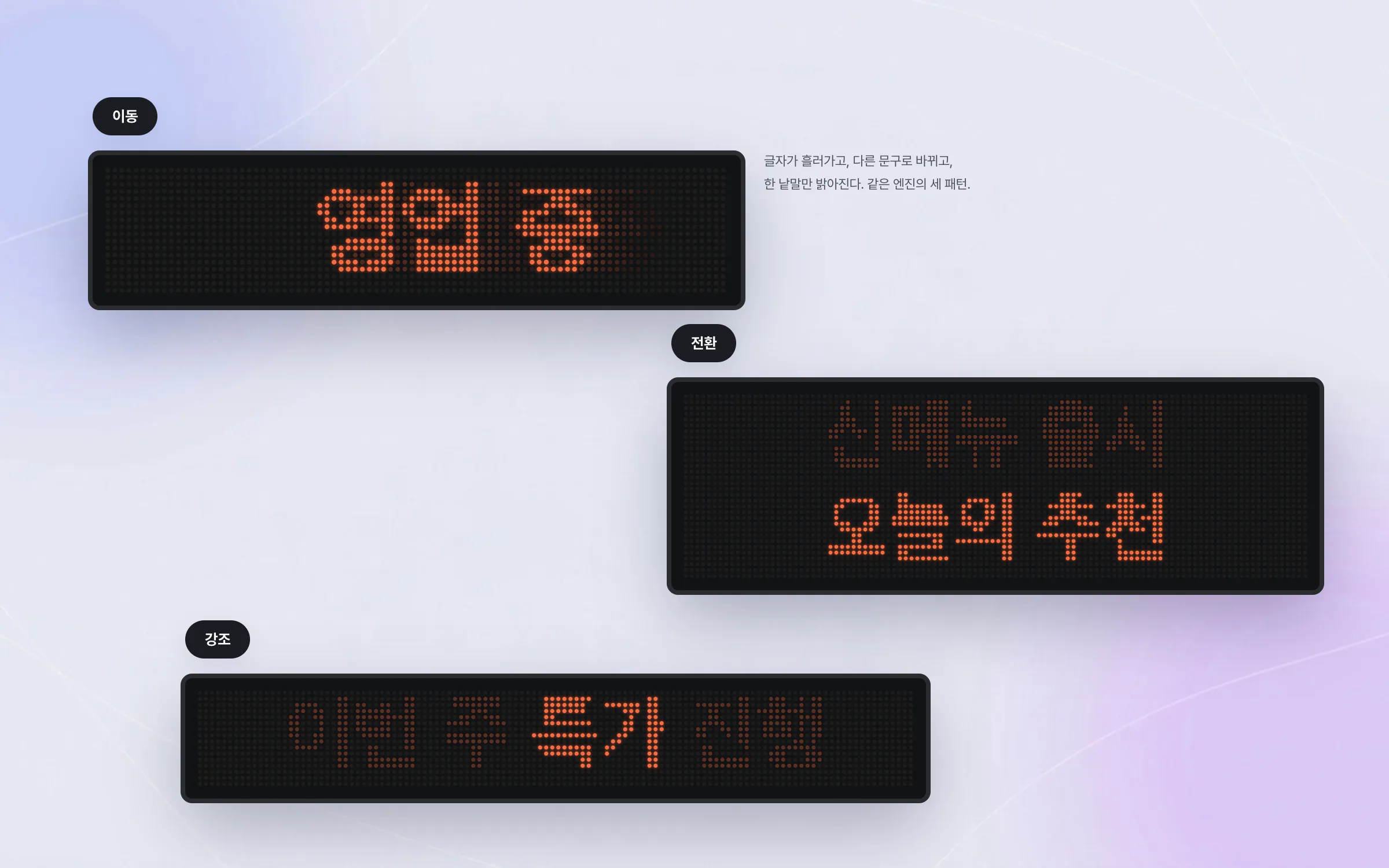
Motion patterns for scrolling, transition, and emphasis
The text motion engine carries several motion patterns: scrolling, where text flows across; transitions, where one message gives way to another; and emphasis, where particular characters stand out. A display board is a more limited canvas than an ordinary screen. Within it, each pattern's visual effect was built so the message still stands out.

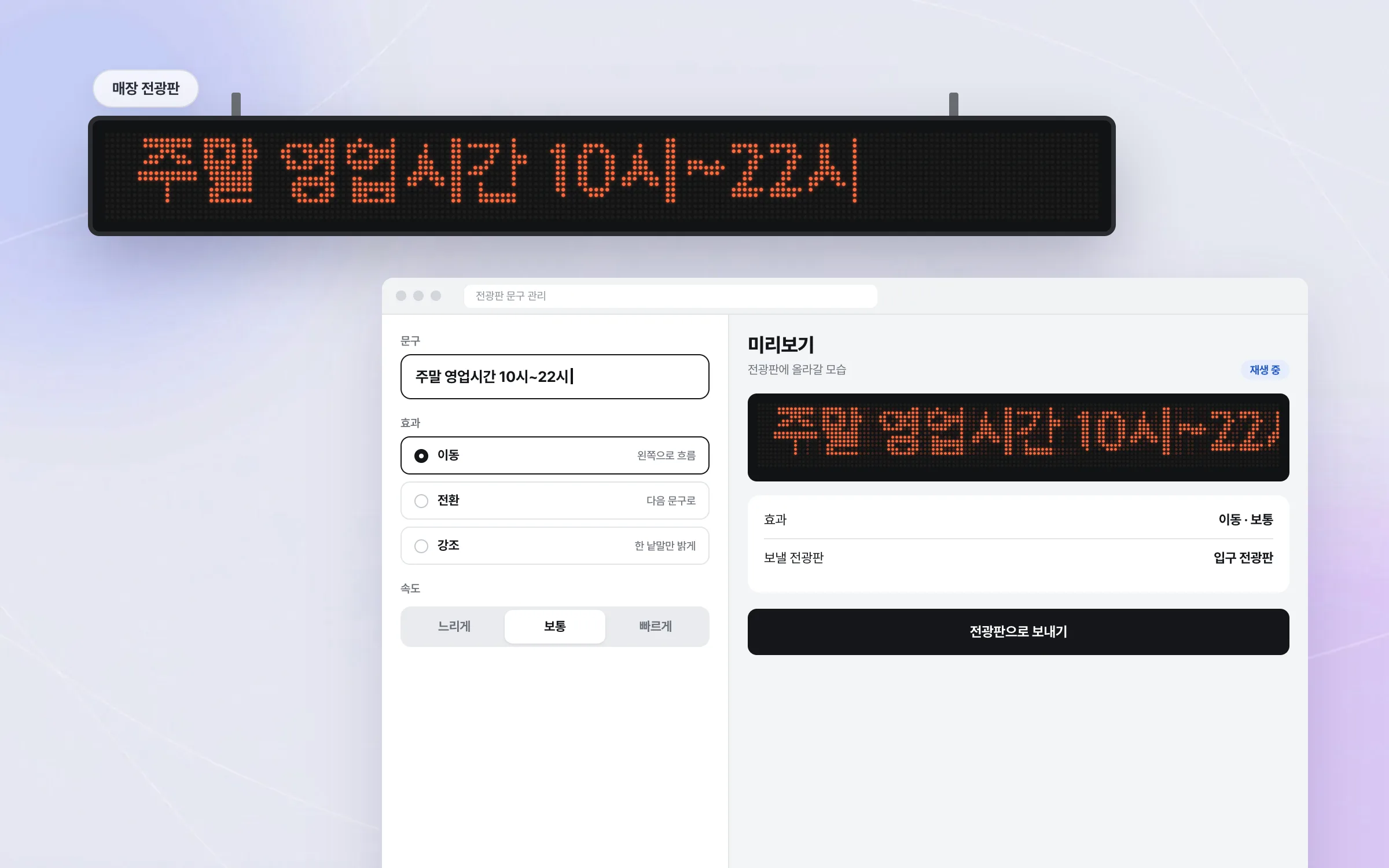
Message management: enter, preview, send
On the input screen, the shop owner writes the ad copy and notices, chooses the settings, checks the result in a preview, and sends it to the board. Entering, previewing, and sending form one flow, so shop operators change the board's messages themselves. Because a preview step comes before sending, they see how it will look on the board first.

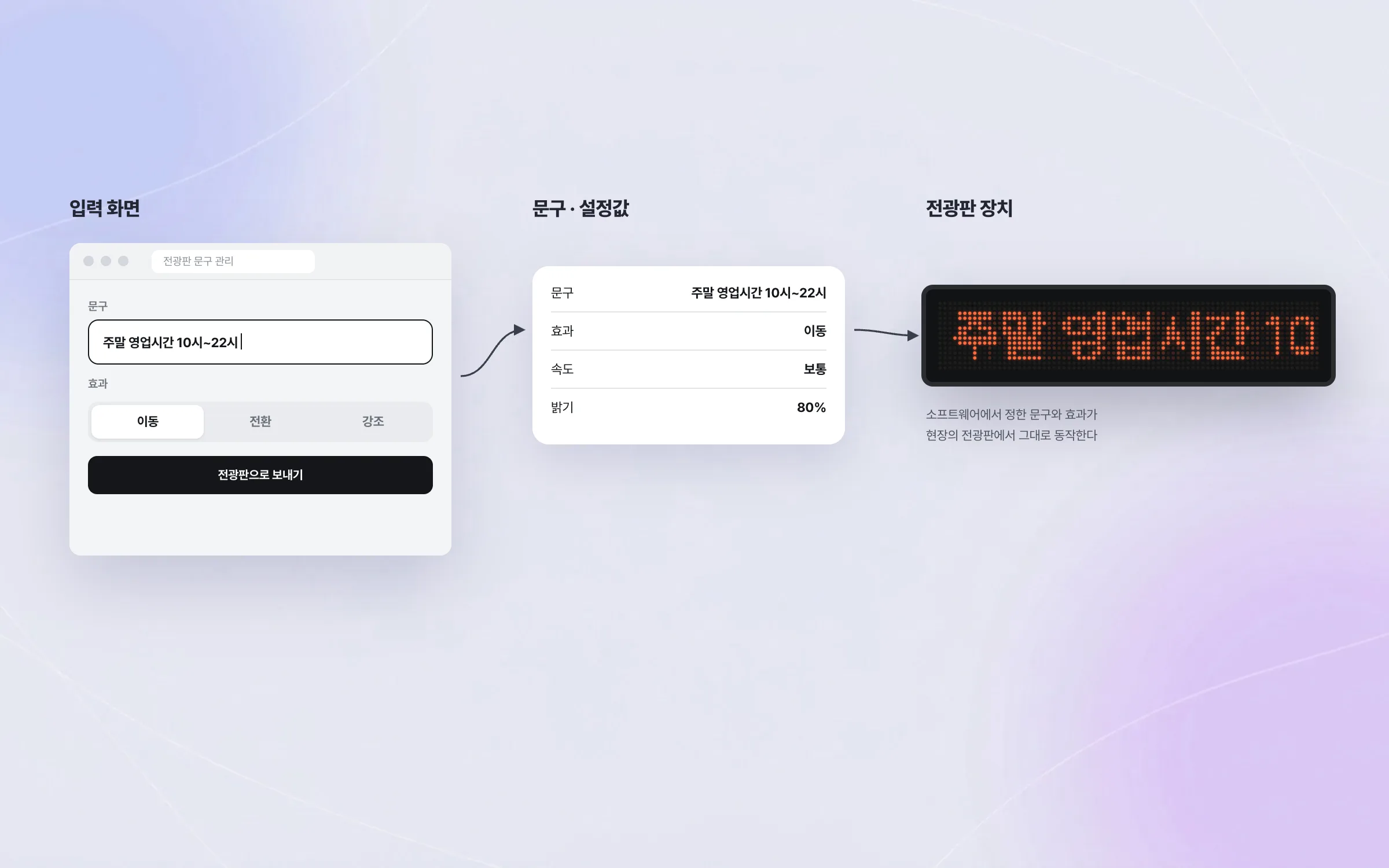
Device integration that carries software settings onto the real board
The text and settings a shop owner enters must show up on the display board exactly as set. We built the flow that hands what was decided in software to the actual hardware so it runs on site. Joined early in our founder's career, the project wrapped up successfully and drew attention inside and outside the company, and it was the first experience of connecting software to a hardware device running in the field.

Highlights
A text motion engine that adds scrolling, transition, and emphasis effects to typed messages
An enter, preview, and send flow shop owners run themselves
Device integration that carries software settings onto the display board as set
Insights
GA4 client_storage: 'none'은 정말 쿠키를 막을까?
두 달 전 이 블로그에 「GA4 쿠키 없이 쓰기」라는 글을 썼습니다. clientstorage: 'none' 으로 쿠키 저장을 끄고, 자체 분석이 쓰던 익명 ID 를 clientid 로 넘기면 쿠키 0개로 GA4 를 쓸 수 있다는 내…
GA4 Measurement Protocol: gtag.js 없이 서버에서 이벤트 보내기
랜딩 페이지의 전송량을 파일 단위로 쪼개 보다가, 가장 큰 파일이 우리 코드가 아니라는 것을 알았습니다. Google Analytics 의 gtag.js 였고, 방문 한 번에 176KB 를 받고 있었습니다. 페이지 전체가 1,094K…
중소 제조업 AI 도입 순서: DX를 먼저 끝내야 할까?
공장을 가진 중소·중견 제조기업 16만여 곳 가운데 스마트공장을 도입한 곳은 19.5%입니다. 회사가 작을수록 이 비율은 더 떨어집니다. 중소벤처기업부가 2025년 4월에 낸 제1차 스마트제조혁신 실태조사 결과입니다. 그림: 기업 규…
Next.js loading.tsx와 404: 버튼이 화면보다 먼저 살아나게 하기
관리 화면 왼쪽 위에 사이드바를 접고 펴는 ☰ 버튼이 있습니다. 폭 하나 바꾸는 버튼인데, 대시보드에서 누르면 2초 넘게 아무 반응이 없었습니다. 레이아웃만 바꾸는 일이 왜 이렇게 오래 걸리는지부터 들여다봤습니다. Next.js 16…